Your child comes home talking about robotics, or the new Coding and Robotics subject lands on the timetable, and one word keeps coming up: Arduino. If you have no idea what that is, you are in exactly the right place. This is a plain-language guide, no jargon, from a Durban store that has been shipping these kits across South Africa since 2014.
The short answer
- Arduino is a small, cheap circuit board that a child can program to control lights, sound, motors and sensors, the real language of robotics.
- It is the world's most popular way to start because it is beginner-friendly, safe (low voltage), and there is nothing to break.
- No experience is needed, by you or your child. The first project is a blinking light; you build up from there.
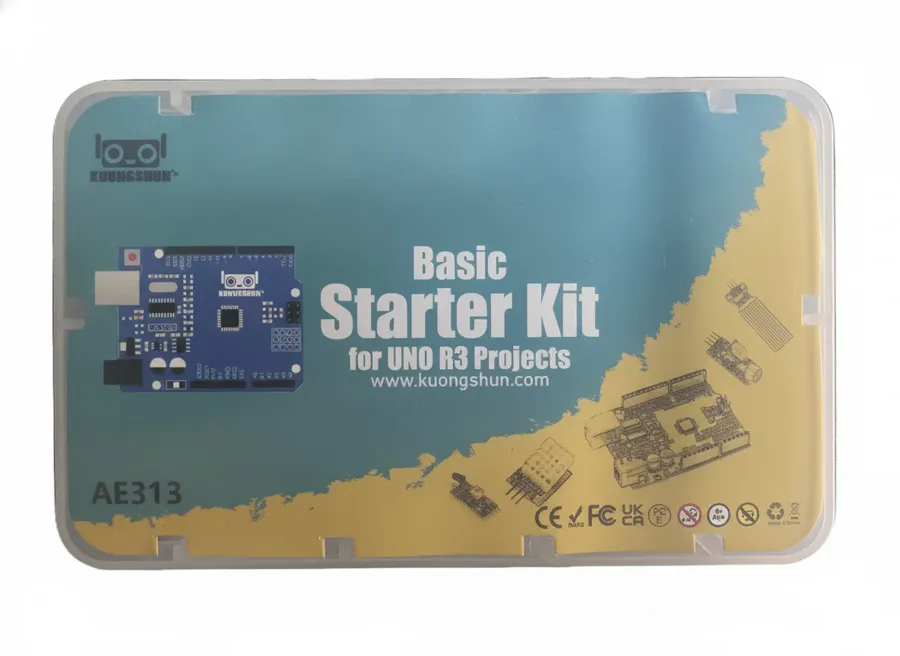
- The easiest way to start in South Africa is a complete kit with guided lessons, such as the R599 Beginner Robotics Kit.

So what is Arduino, really?
Think of Arduino as a tiny, affordable brain that your child gets to boss around. It is a small circuit board, about the size of a matchbox, with a chip on it that can be programmed from a normal computer. On its own it does nothing exciting. The magic starts when you connect things to it, an LED, a buzzer, a temperature sensor, a motor, and write a few lines of code telling it what to do: turn this light on when the room goes dark, sound the buzzer when someone walks past, spin this wheel when a button is pressed.
That is genuinely how real robotics works. The self-parking sensor in a car, the automatic doors at the mall, a smart home light that comes on at sunset, all of it is the same idea your child learns on day one with an Arduino: read something from the world, make a decision in code, then make something happen. Arduino simply shrinks that down to a size a beginner can hold, understand and afford.
Why is Arduino the way almost everyone starts?
There are other ways into electronics, but Arduino has quietly become the default first step for schools, hobbyists and universities worldwide. A few honest reasons why:
It is safe and hard to break
An Arduino runs on low voltage from a USB cable, the same as charging a phone. There is no mains electricity involved and no soldering needed to start. Parts push into a breadboard by hand. If your child wires something the wrong way, the usual result is that it simply does not work, not that anything is damaged. That safety net is exactly what makes it good for an eight-year-old.
It is cheap
A complete beginner kit costs less than a single video game. You are not committing to an expensive machine to find out whether your child enjoys it; you are risking the price of a takeaway dinner.
There is a mountain of help
Because so many people start here, every beginner question has already been answered a thousand times online. Your child is never stuck alone, and neither are you.
It teaches real code, not a toy
Some learning gadgets only let a child drag coloured blocks around forever. Arduino lets them start simple and grow into genuine text-based code, the kind used in the real world. It grows with the child instead of being outgrown in a month.
What can a child actually build with it?
This is the part that turns a curious child into a hooked one. The projects start tiny and quickly become things they are proud to show off. Here is the kind of progression a beginner follows over their first few weeks:
| Stage | What they build | What they are really learning |
|---|---|---|
| Week 1 | A single blinking light | Sending their first instruction to a machine |
| Week 1 | A working traffic-light robot | Timing and sequences |
| Week 2 | A dimmer and a colour mixer | Reading a dial, mixing red, green and blue |
| Week 3 | A night light that senses darkness | Reading a sensor and reacting to it |
| Week 4 | A desk guardian that detects movement | Combining sensors, sound and logic |
From there the ceiling keeps rising. The same Arduino skills lead straight into a robot car that drives and avoids walls, a smart home you control from a phone, or a programmable robot arm that picks things up. It is the same foundation the whole way up.
Do I need to know anything to help my child?
No, and this is the reassurance most parents are looking for. You do not need to understand electronics or coding. The whole point of a good beginner kit is that it explains every step in plain language and assumes nothing. Your job is not to be the teacher; it is to sit alongside, plug in the USB cable, and share the small thrill when the first light blinks. Plenty of parents tell us they ended up learning it right beside their child, which is half the fun.
The easiest way to start in South Africa
You can buy a bare Arduino board and a bag of loose parts, but for a beginner that often means a pile of components and no idea what to do with them. The gentler route is a complete kit that comes with the parts and the lessons, so there is a clear path from the first day.
A complete Arduino-compatible starter kit paired with twelve guided online lessons, written for absolute beginners. No experience, no soldering, nothing else to buy, and a certificate of completion at the end.
This is the kit we point almost every first-timer to. It takes a complete beginner from that first blinking light to a movement-sensing desk guardian, one small win at a time, and every line of code is explained as you go. Want to try the style before you spend anything? We keep one lesson free so you can see exactly how it teaches. If you would like the fuller reasoning, here is our guide to the best robotics kit for a 10-year-old.
How much does it cost to get going?
Less than most parents expect. A complete beginner kit with lessons is R599, and that single box covers everything a child needs for their first several weeks, no hidden extras, no subscription. Compared with the price of a new game or a month of after-school classes, it is a small outlay for something that can genuinely shape what a child chooses to study later.
Quick questions parents ask us
What is Arduino in simple terms?
Arduino is a small, low-cost circuit board that you can program from a computer to control lights, sound, motors and sensors. It is the standard beginner-friendly way to learn the electronics and coding behind robotics.
Is Arduino good for kids and complete beginners?
Yes. It runs on safe low voltage from a USB cable, needs no soldering to start, and is very hard to damage. With a guided kit, a child of eight and up can go from a blinking light to a working sensor project with no prior experience.
Do I need coding experience to help my child?
No. A good beginner kit explains every step in plain language and assumes nothing. Many parents learn it alongside their child. If anyone gets stuck, a real person helps over WhatsApp.
What is the difference between Arduino and Raspberry Pi?
An Arduino is a simple controller that is brilliant for reading sensors and driving lights and motors, and it is the easier place to start. A Raspberry Pi is a small full computer that can run a screen and browser. For a first step into robotics and coding, Arduino is the gentler entry point.
Where can I buy an Arduino kit in South Africa?
GAMERIFT stocks a complete beginner Arduino kit with twelve lessons for R599 and ships across South Africa with tracked courier. We have been trading since 2014 with over 17,000 orders shipped.
The short version
Arduino is the little board behind almost every child's first real robot: cheap, safe, forgiving, and powerful enough to grow with them for years. It is the reason a nervous beginner can go from "I know nothing about this" to a working, movement-sensing gadget in an afternoon. If your child is curious about robotics or coding, this is the doorway, and the R599 Beginner Kit is the simplest way through it. Not sure it is the right fit? Message us with your child's age and a real person will point you the right way.