Every week someone lands in our messages with the same question: my child is turning ten, they love building things, which robotics kit should I buy? It is a good question, and most of the answers online are written by people who have never had to handle the return when it goes wrong. We sell these kits every day from Durban, so here is the honest version.
The short answer
- Start with a complete beginner kit that includes lessons, not a bag of parts and not a Raspberry Pi.
- The Beginner Robotics Kit with 12 Lessons (R599) is what we recommend for ages 8 to 12.
- Not sure? Try a full lesson free before spending a rand.
What actually matters at age ten
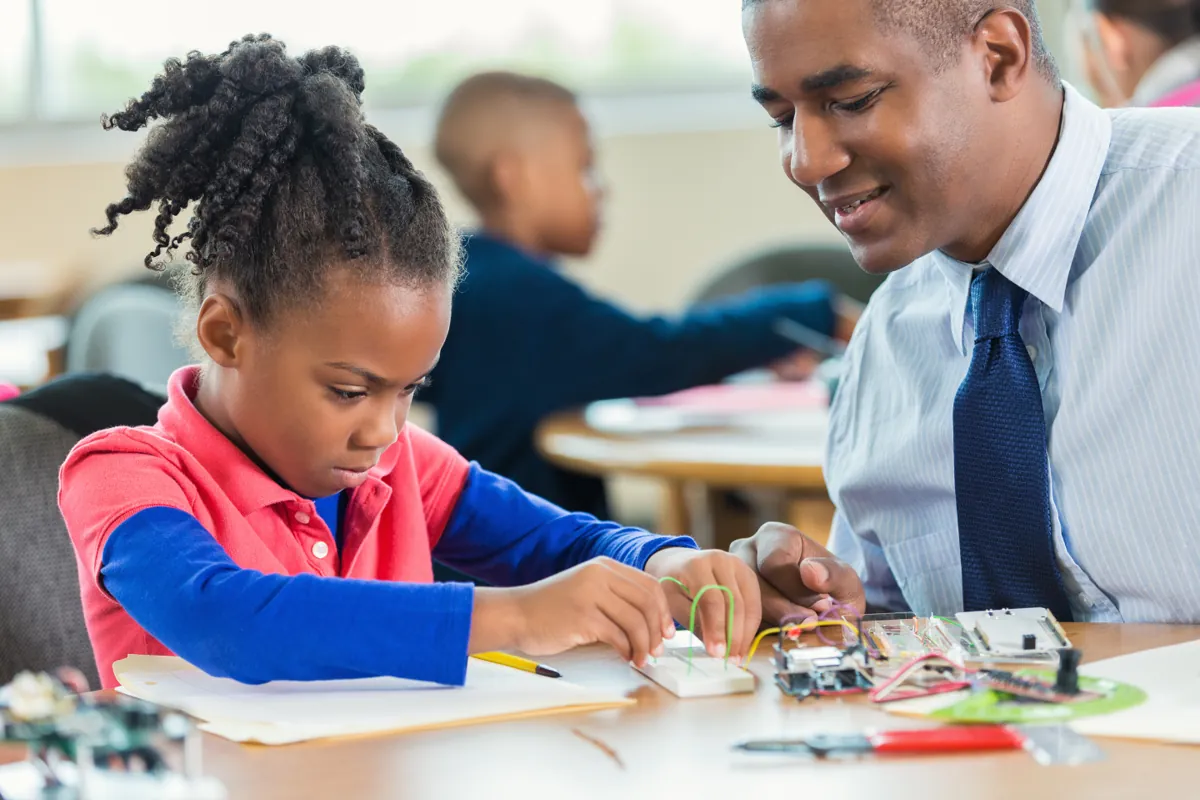
Forget the feature lists for a moment. At ten, only three things decide whether a kit becomes a hobby or a drawer ornament:
1. Can they finish something on day one?
A child needs a win in the first hour. A blinking light they wired themselves beats a half-assembled robot that needs a parent every ten minutes.
2. Are the lessons written for an actual beginner?
Most kits ship with a parts list and a PDF written by an engineer, for an engineer. If the instructions assume your child knows what a resistor does, the kit will lose them by page three.
3. Is it real?
Kids know the difference between a toy that pretends and a real circuit doing a real thing. Real Arduino code that they typed themselves carries a pride that no remote-control toy can match.
The three mistakes we see most often
Buying too advanced. A Raspberry Pi is a wonderful machine, and we stock them, but it is a full computer. For a ten-year-old starting out, it is like teaching someone to swim in the deep end. Start with something that cannot overwhelm them.
Buying parts without lessons. A bag of components is cheap, and it is cheap for a reason. Without a course that carries a child from one small win to the next, components are homework nobody assigned. The lessons are the product. The parts are just the ingredients.
Buying a "robot" that is really a remote-control car. If the child never writes or changes a line of code, it is a toy car with good marketing. Fun for a weekend, but it teaches nothing that lasts.
Our answer: start with the Beginner Robotics Kit
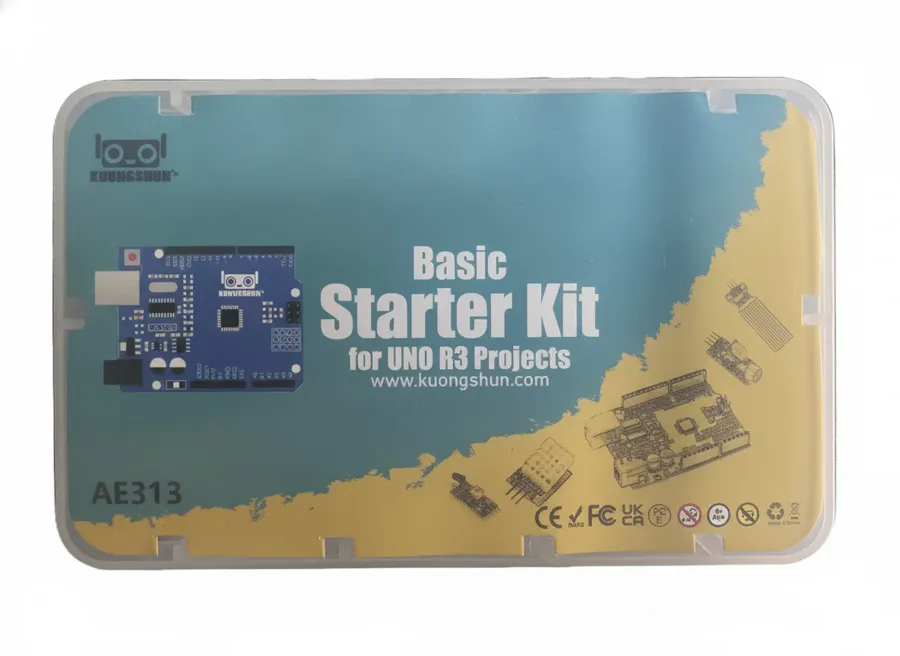
Beginner Robotics Kit with 12 Lessons
A complete Arduino starter kit plus twelve online lessons written for ages 8 to 12. No soldering, nothing extra to buy, and a verifiable certificate at the end.
This is the kit we put together for exactly this child. Lesson one gets a light blinking. From there your child plays with buttons, dials, colour, sound and sensors, one small build at a time, and finishes by building a desk guardian that senses when someone comes near and raises the alarm. Every line of code is explained in plain language.
We wrote the twelve lessons so a child can follow them alone, because that is where the confidence comes from. Most families do one lesson a week, about an hour at a time, and every lesson can be printed, so the course is theirs to keep. Finish all twelve and they earn a certificate of completion with a unique ID that anyone can verify online.
How the options compare
| Option | Price | Best for | Includes lessons? |
|---|---|---|---|
| Beginner Robotics Kit + 12 Lessons | R599 | Ages 8 to 12, first kit ever | Yes, twelve |
| Basic Starter Kit (parts only) | R350 | Hobbyists who can self-teach | No |
| ACEBOTT Smart Car Starter Kit | R1,400 | Ages 10 to 15, second kit | ACEBOTT guides |
| Raspberry Pi route | R1,400+ | Teens ready for real Python | No |
When they are ready for wheels

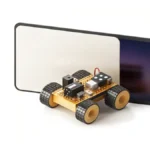
After the beginner kit, the natural next step is a robot that drives. We recommend the ACEBOTT Smart Car Starter Kit (R1,400): your child builds a real car with motors and wheels, then teaches it to drive, follow a line and avoid walls. It is complete on its own, and there is a whole shelf of upgrades that bolt onto it later, a wireless controller, a robot arm, even a camera. We are an authorised ACEBOTT distributor, so spares and support are local.
You can see the full path, from first light to robot arm, on our kits page.
A note for schools
If you are buying for a class rather than a child, the sums change: kits can be shared between benches, and the per-learner cost drops fast. We put together class sets and quotes for South African schools teaching the Coding and Robotics curriculum. Details on our schools page.
Quick questions parents ask us
Is 10 a good age to start robotics?
Yes, it is close to ideal. At ten most kids can read instructions independently, type simple code, and handle small components carefully. Our beginner lessons are written for ages 8 to 12, so a ten-year-old sits right in the middle.
Does my child need any experience or special software?
No experience at all. The lessons assume nothing and explain every line of code in plain language. You need a computer with a USB port and the free Arduino software, and lesson one walks you through installing it.
What if we get stuck on a lesson?
Send us a photo of the wiring on WhatsApp and a real person will spot the problem, usually the same day. Getting unstuck is part of what you are buying.
The short version
For a ten-year-old in South Africa in 2026: start with a complete beginner kit with real lessons for R599, try the free lesson first if you are unsure, and save the Raspberry Pi for their fourteenth birthday. Still not sure which way to go? Ask us. A real person reads every message, and we would rather point you to the right kit than sell you the wrong one.